Robin Pululu · Freelance AI product manager & builder in Melbourne
Products, and the workbehind them.
I'm Robin. I take messy problems from first conversation to working product, with AI in the product, in the way I build it, or both. Behind that are ten years across product, consulting and operations, in Europe and Asia.
Selected work
04See what a change does to team capacity, while you make it.
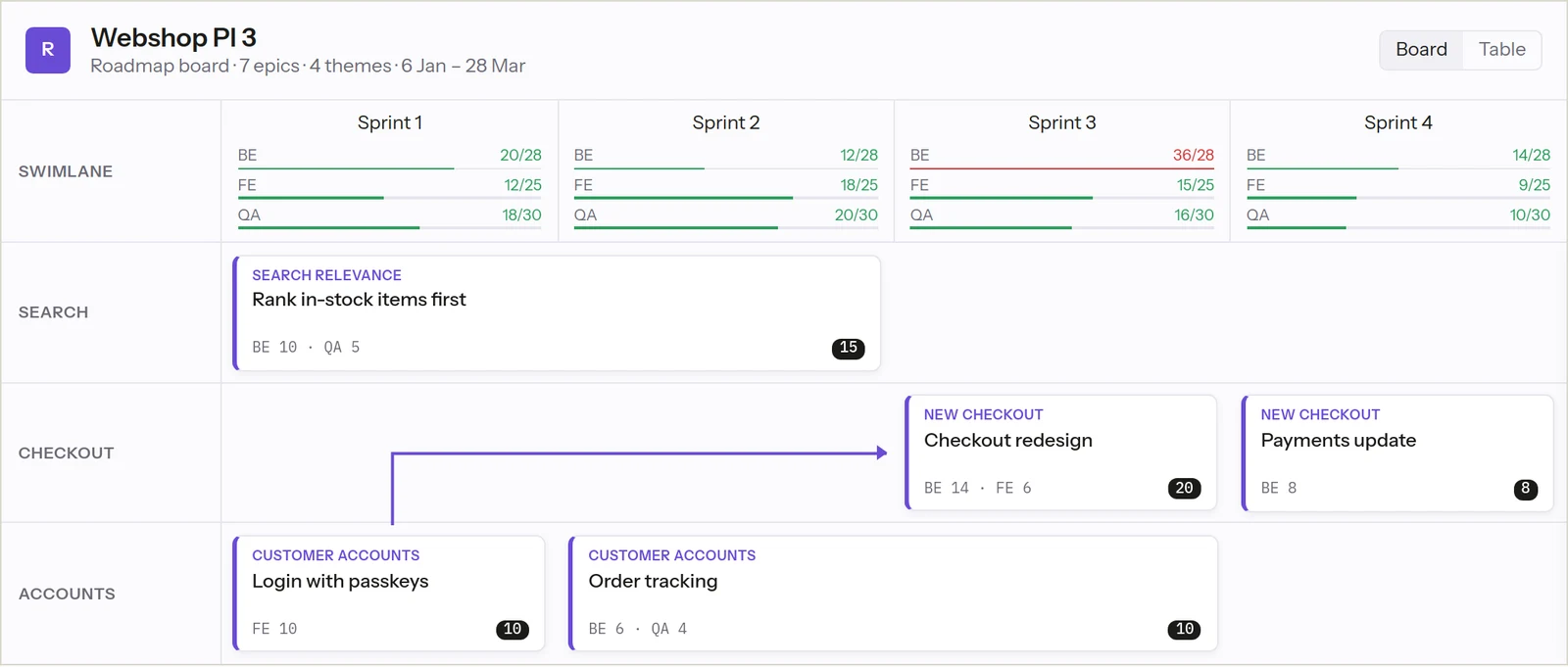
A tech consultancy was revamping its methodology towards a product way of working, but its four product teams were still planning without roadmaps. Jira and Azure DevOps show tickets, not what a plan does to each team. Security rules at several clients ruled out tools like Miro, so we had to build something quick and useful ourselves, to improve communication and decision making with the client.
A board where epics are dragged across sprints and capacity per role updates live. Cards link back to their tickets, dependencies are drawn between them, and every change is kept in a history.
Introduced the roadmap practice across the four teams as part of that shift, then designed the tool and built it with one frontend developer.
| Frontend | React |
|---|---|
| Backend and hosting | Azure |
| Sign-in | Microsoft Entra ID |
| Links | Ticket links to Jira, Azure DevOps or Linear |
| Team | Me and one front-end developer |
| Built with | Claude Code |
All the admin, from the job card to the invoice, done by AI. People only approve.
Most of a plumber's day happens on the floor, yet every job ends in paperwork: the job card, materials, checks, and a report for the customer and often the insurer. Frequently it's a legal requirement. It gets typed up in the van or late at night at home, and costs firms up to eight hours per person per week: a full workday spent on admin. And when the price first shows up on the invoice, the job ends with “this is too expensive”. So KVIK drafts an estimate upfront.
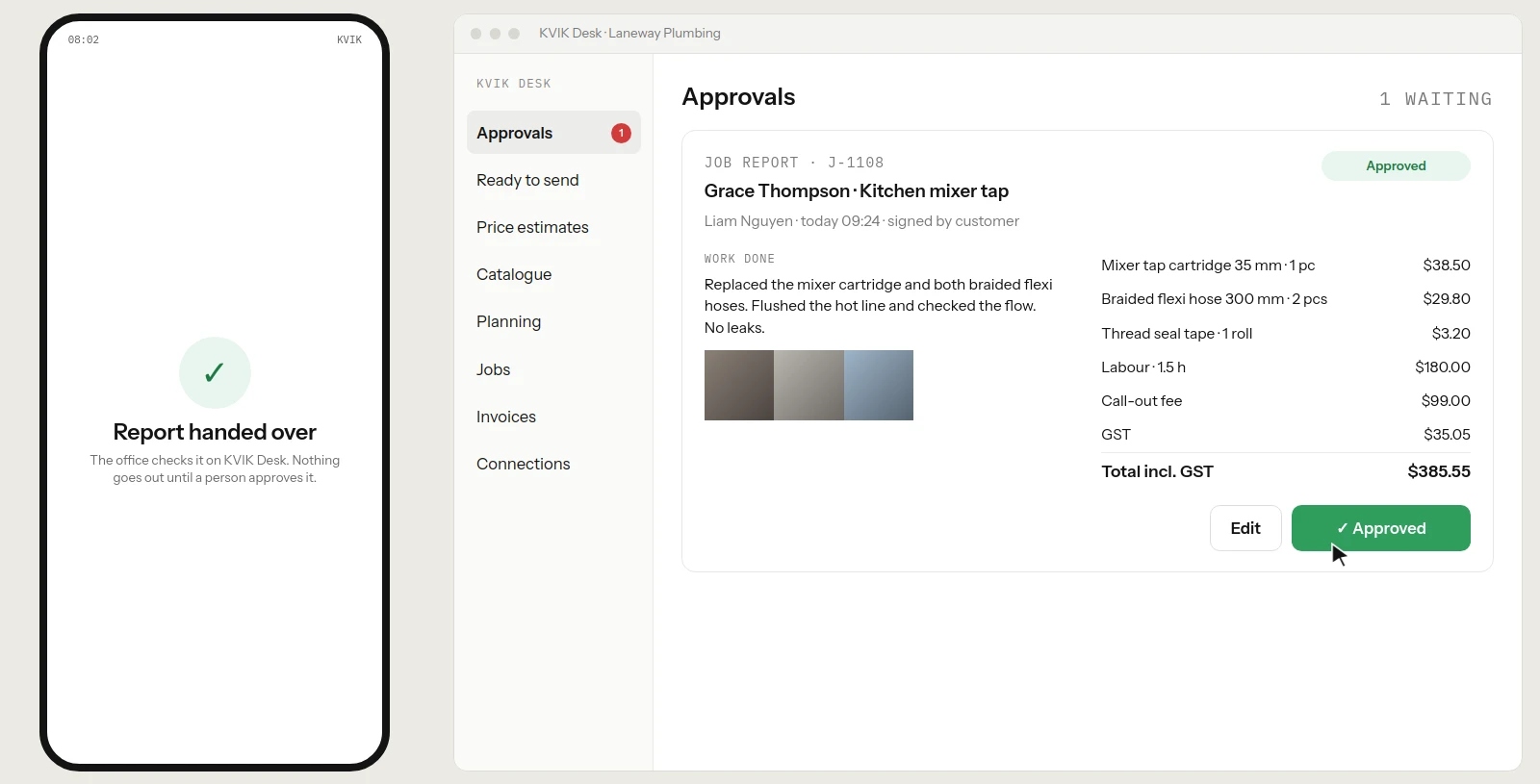
An app for Australian plumbing firms that hands all admin to AI, from documentation to billing. Technicians talk through the job on site, and KVIK writes the job card, materials, compliance records, report and invoice, then sends the invoice to Xero or MYOB. Nothing goes out until a person approves it.
Product, design and engineering, including a voice assistant that won't take a bare “yes” for an answer. Building it solo since September 2026, shaped through conversations with plumbers. Launching with plumbing firms in Australia.
| App | React Native and Expo, for iOS and Android |
|---|---|
| Office desk | React Native Web on Vercel |
| Voice | Soniox speech to text |
| AI | Mistral, for job drafts and the assistant |
| Backend | Hono and Drizzle on Azure Container Apps |
| Data and sync | Azure PostgreSQL with pgvector, PowerSync for offline work |
| Bookkeeping | Xero and MYOB |
| Monitoring | Sentry, PostHog |
| Testing | Jest, Playwright, evals for every AI feature |
| Way of working | Linear, Claude Code, sandboxed coding agents |
See where your money goes and what it could do for you, even when it's spread across banks in three countries.
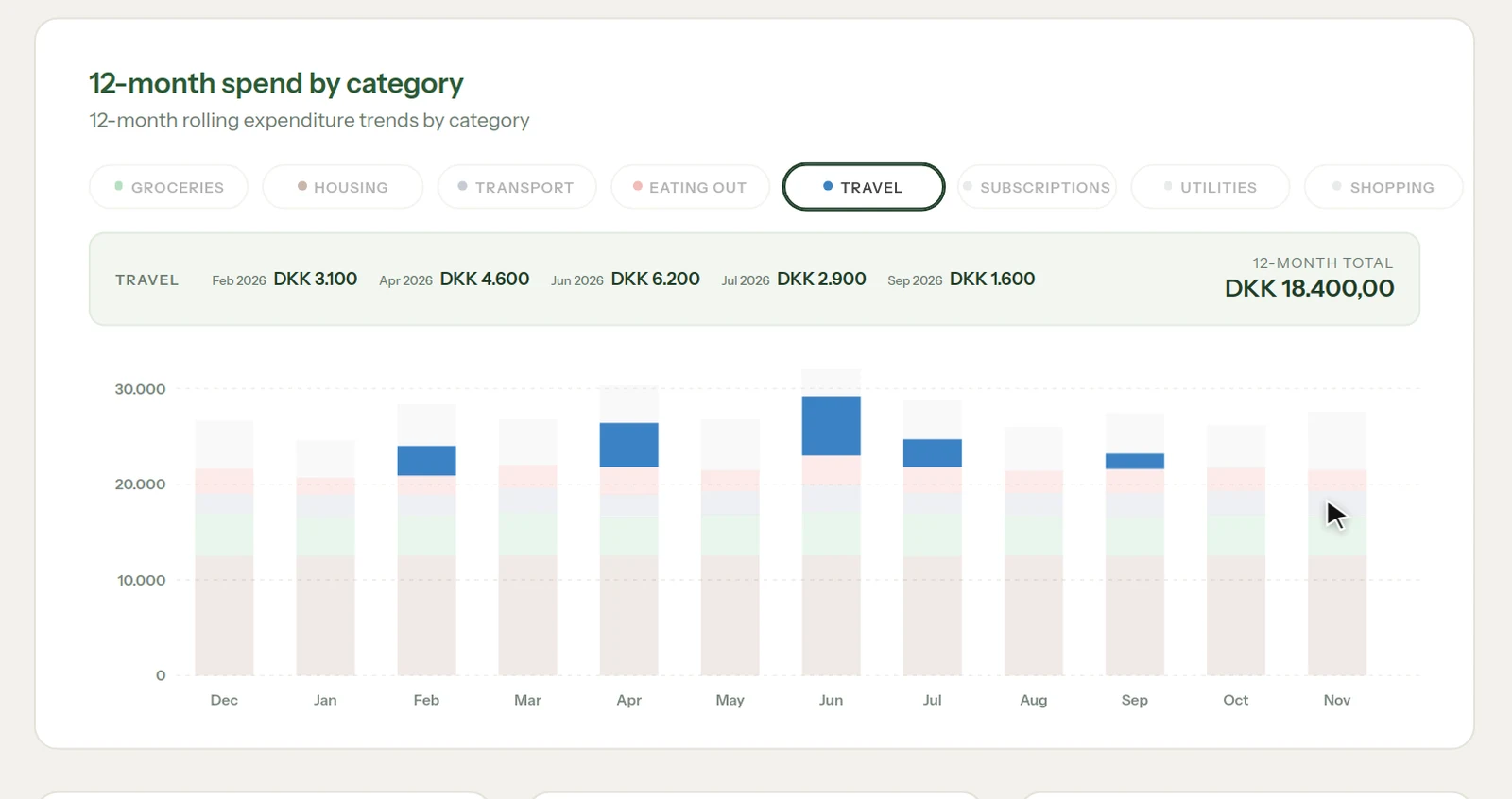
Most people never get a clear picture of their own money, and it gets harder every time you move. Live in a few European countries and you collect accounts in different banks and currencies, a pension here, a broker there, and no app that sees all of it. Real financial advice is priced for people who already have plenty. So the questions that matter stay unanswered: where does my money go, am I on track, and what would it take to be financially independent?
A personal finance app that turns your bank data into insight, built for people whose financial life spans more than one country. Accounts across Europe connect live through open banking, AI tags every transaction and learns your merchants, and goals are set from your past spending, so plans stay honest and within reach. Sal, the built-in AI advisor, explains your own numbers in plain language, with all AI running in the EU.
Product, design and engineering, building it solo. Live with a small group of trial users.
| Frontend | React, Vite, TypeScript |
|---|---|
| Backend and data | Supabase (Postgres, edge functions), hosted in Germany |
| Open banking | Enable Banking (PSD2) |
| AI | Mistral, in the EU, for tagging and the Sal advisor |
| Payments | Stripe |
| Hosting | Vercel |
| Monitoring | PostHog, Sentry |
| Resend | |
| Testing | Vitest, Playwright, Evalite for AI features |
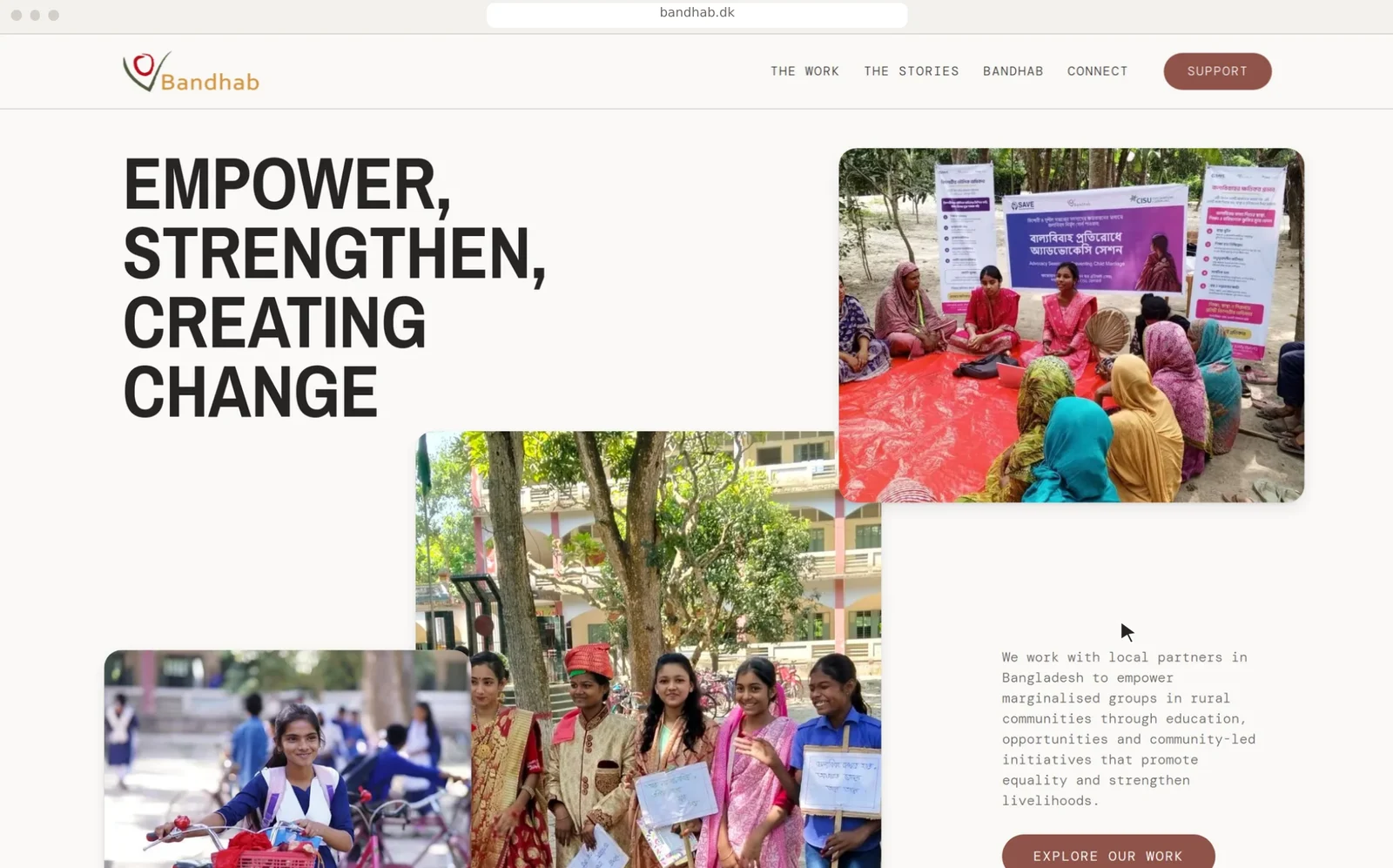
A redesigned site the team can keep up themselves, with a clear path to the work, the stories and ways to support.

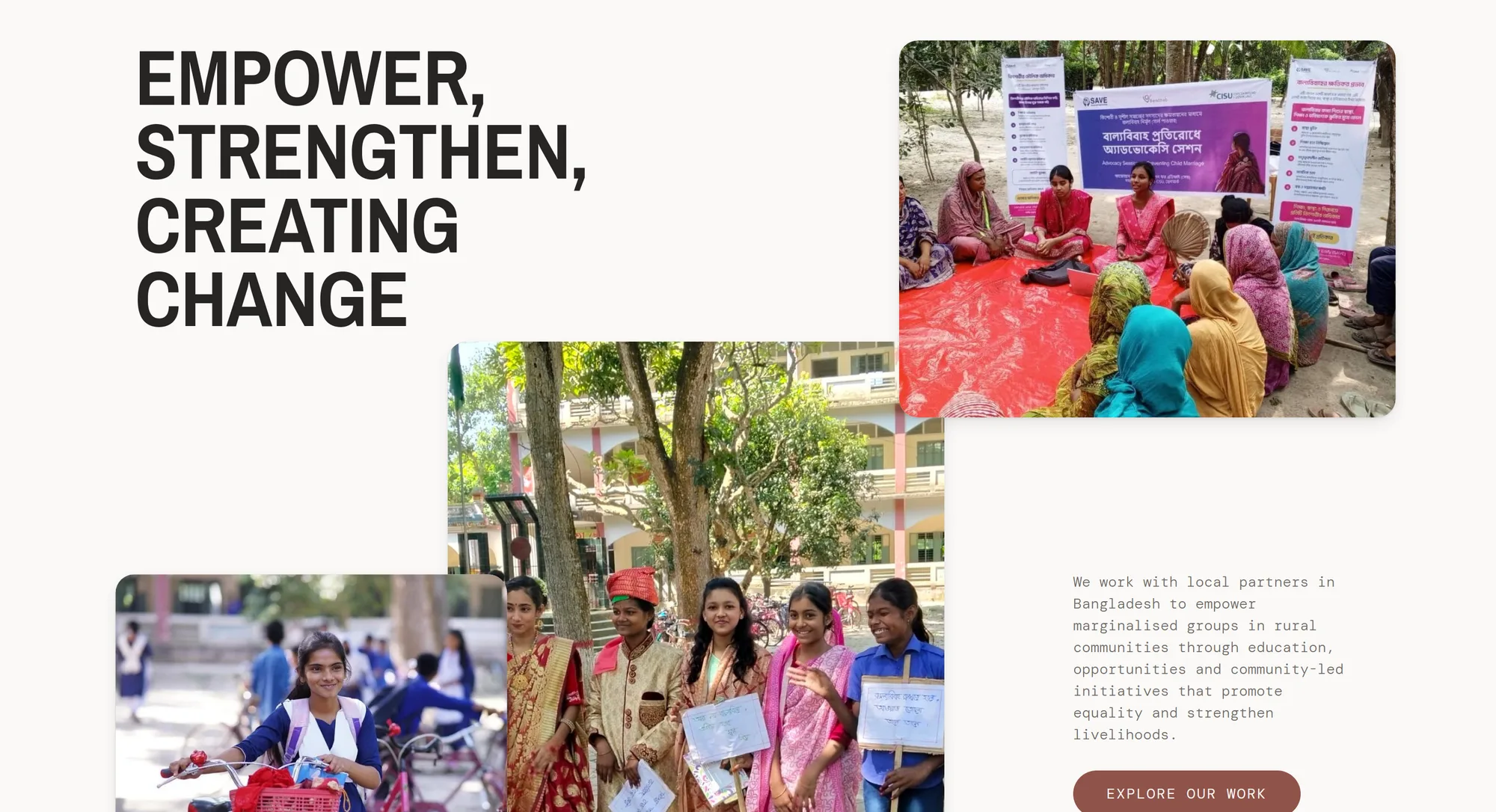
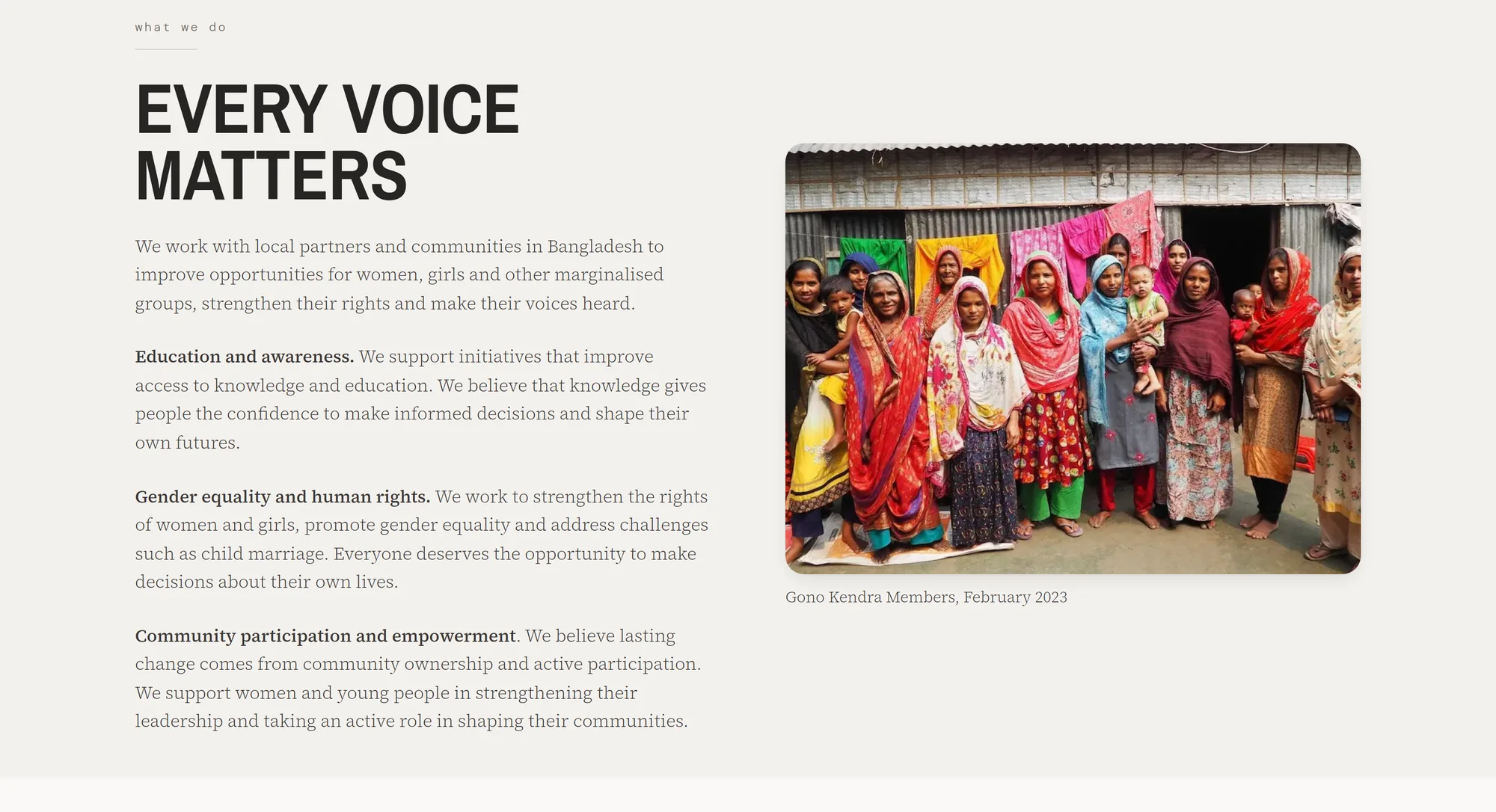
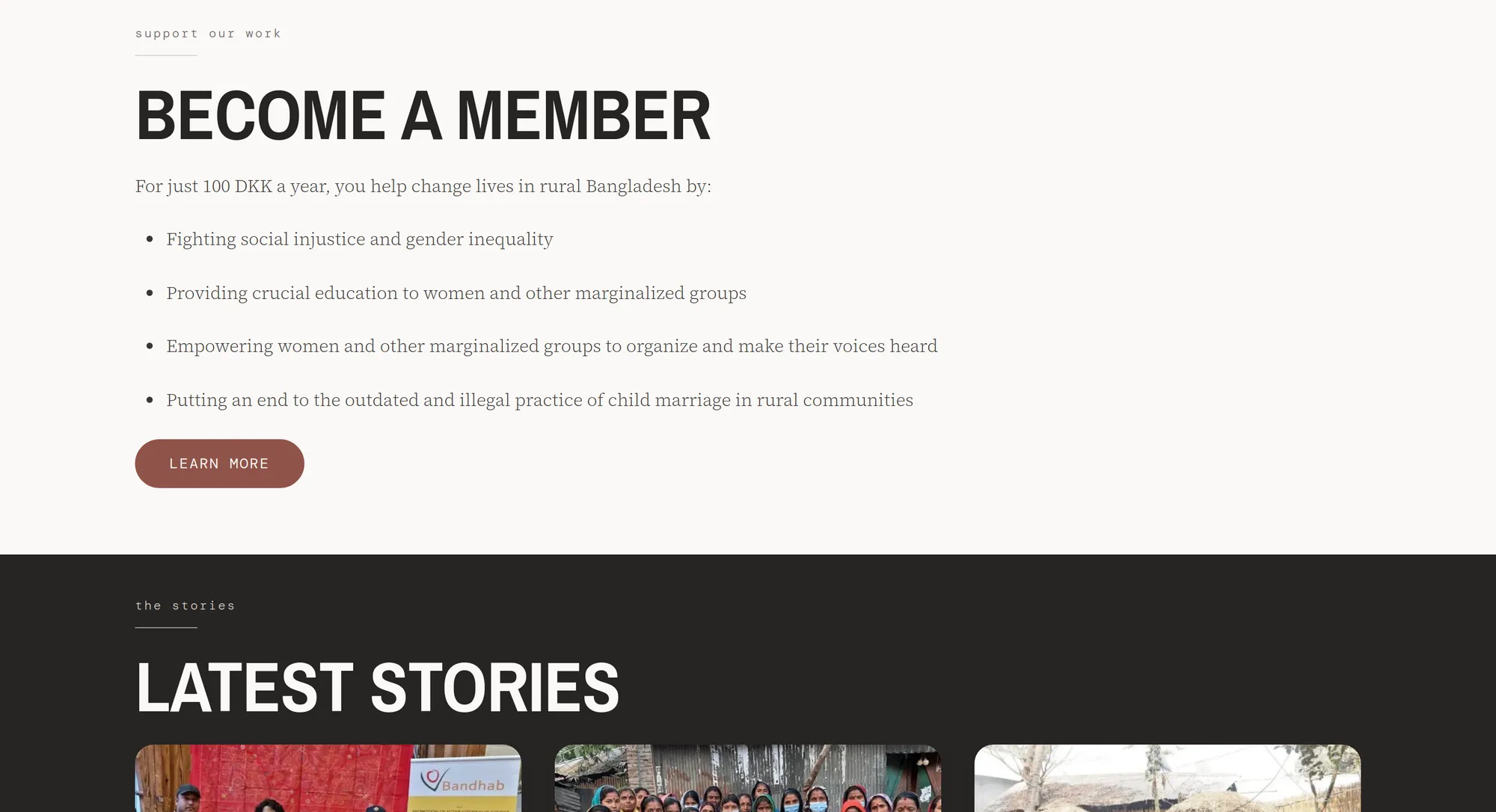
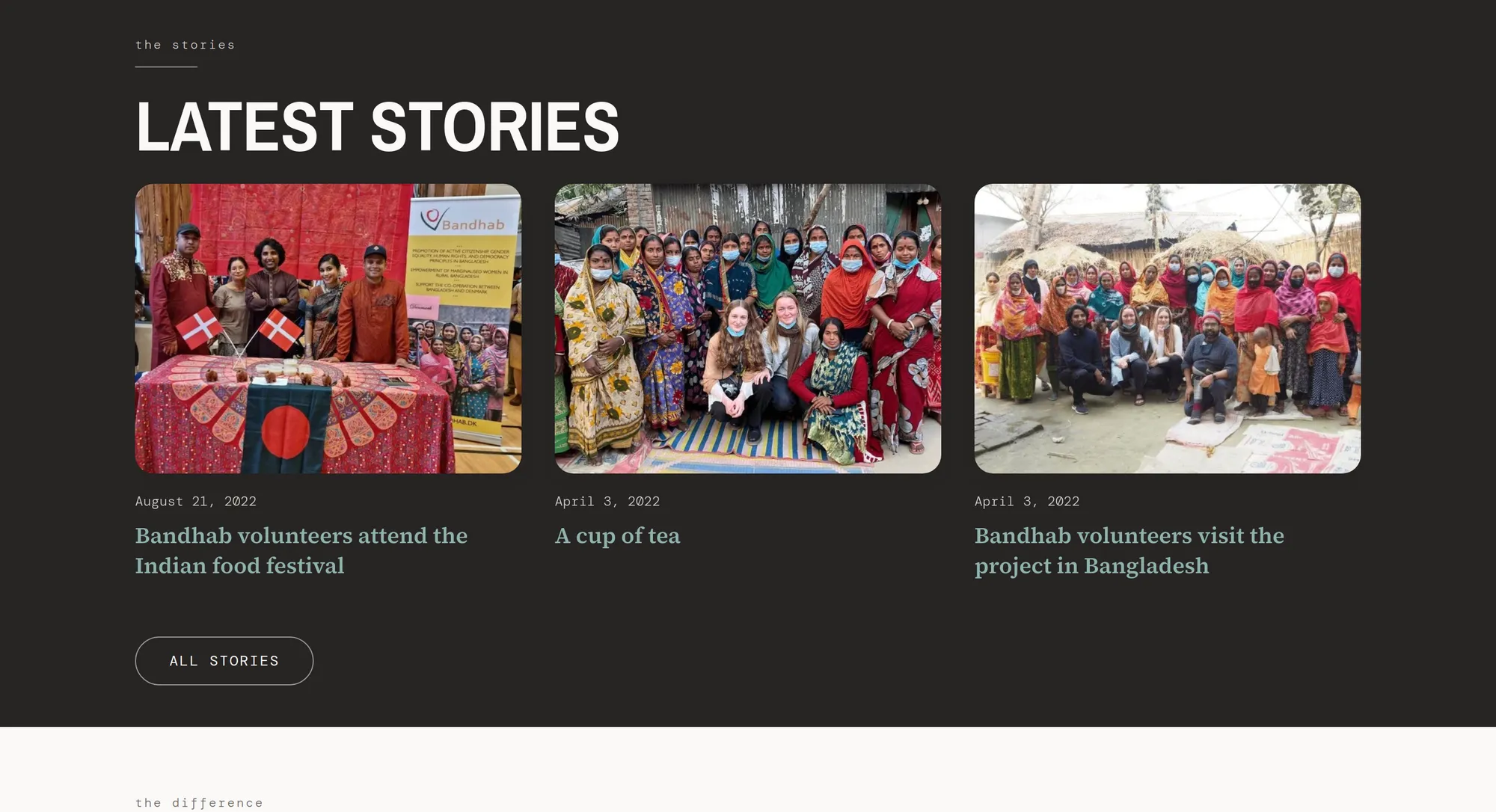
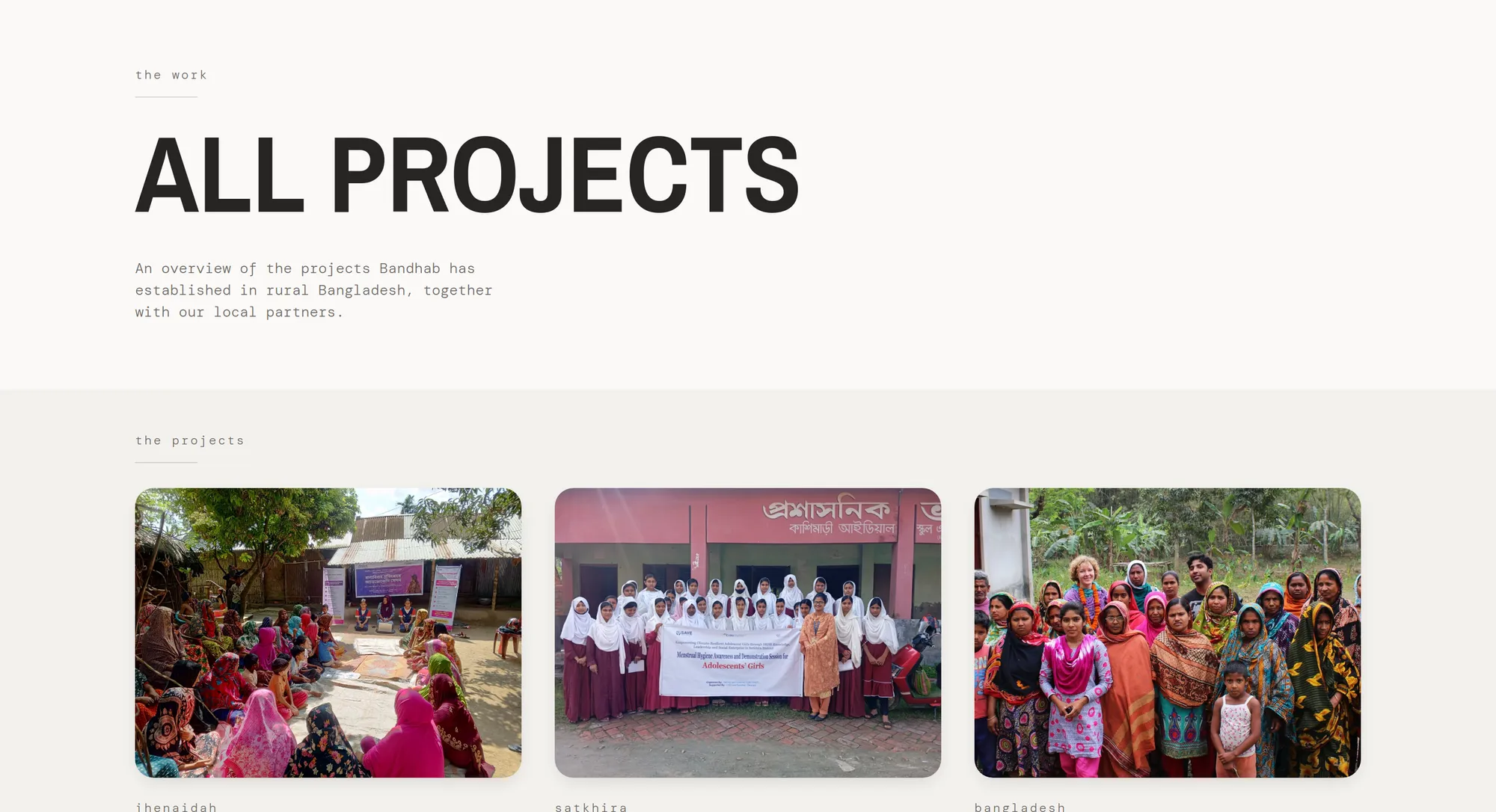
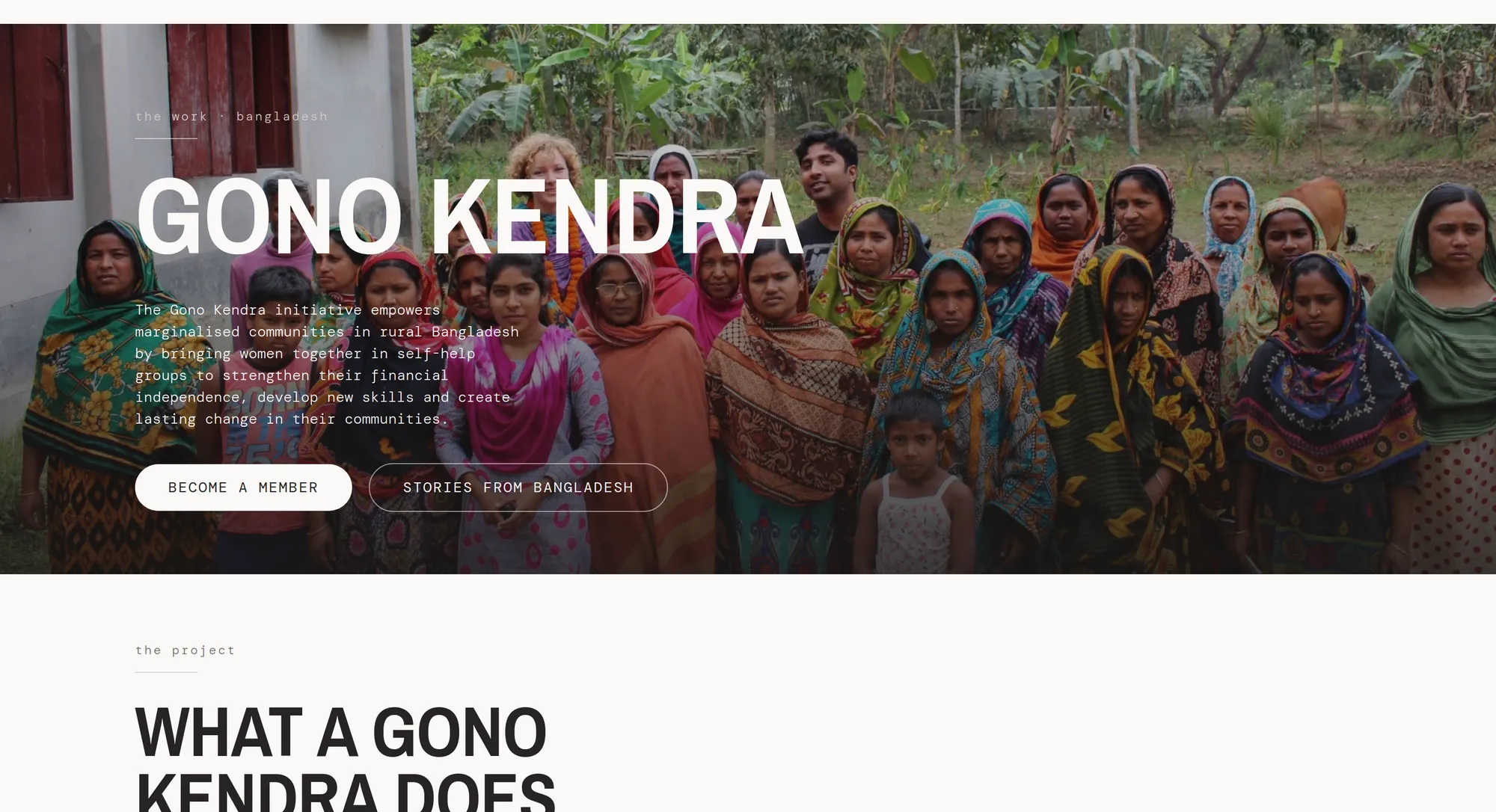
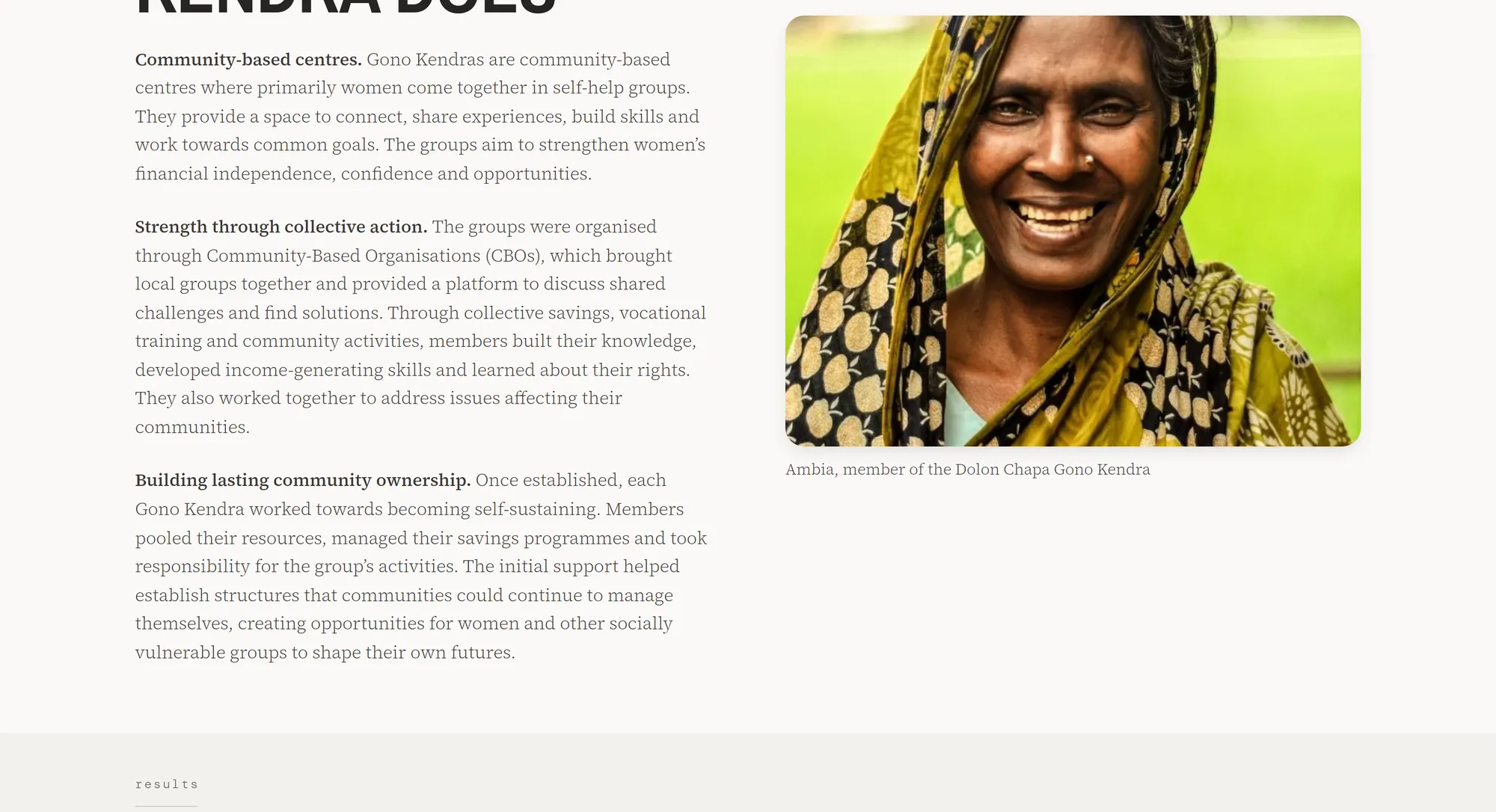
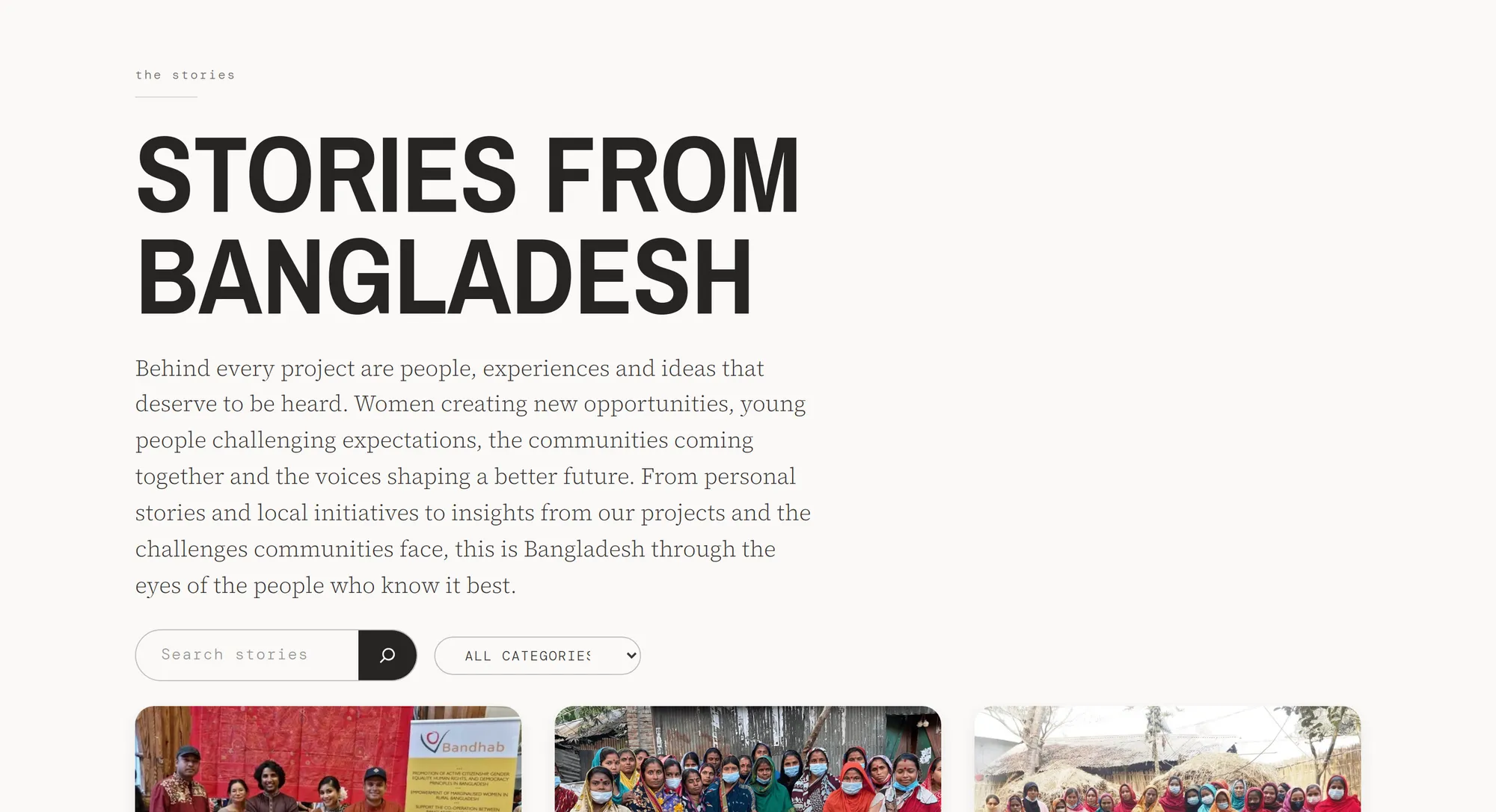
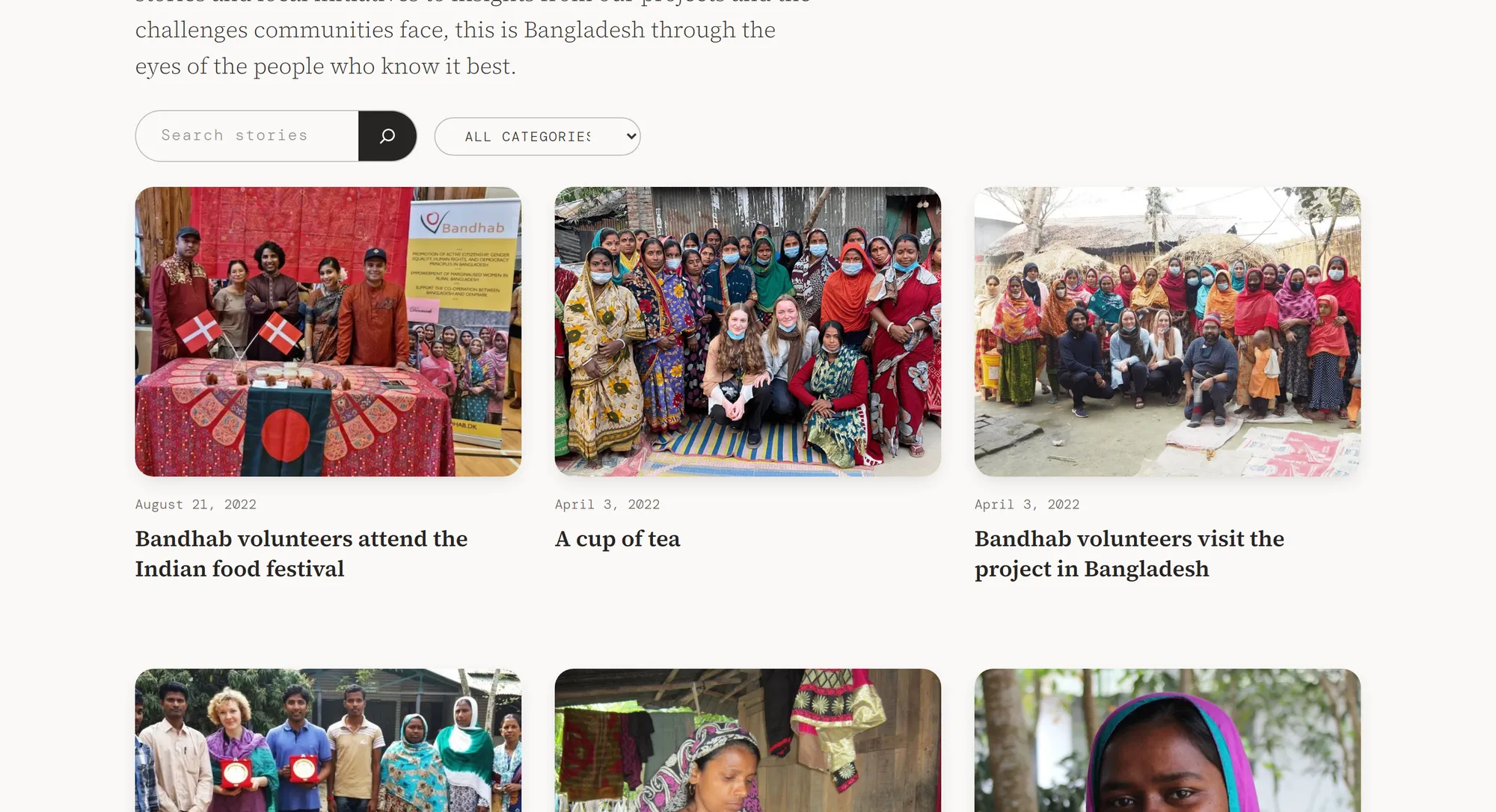

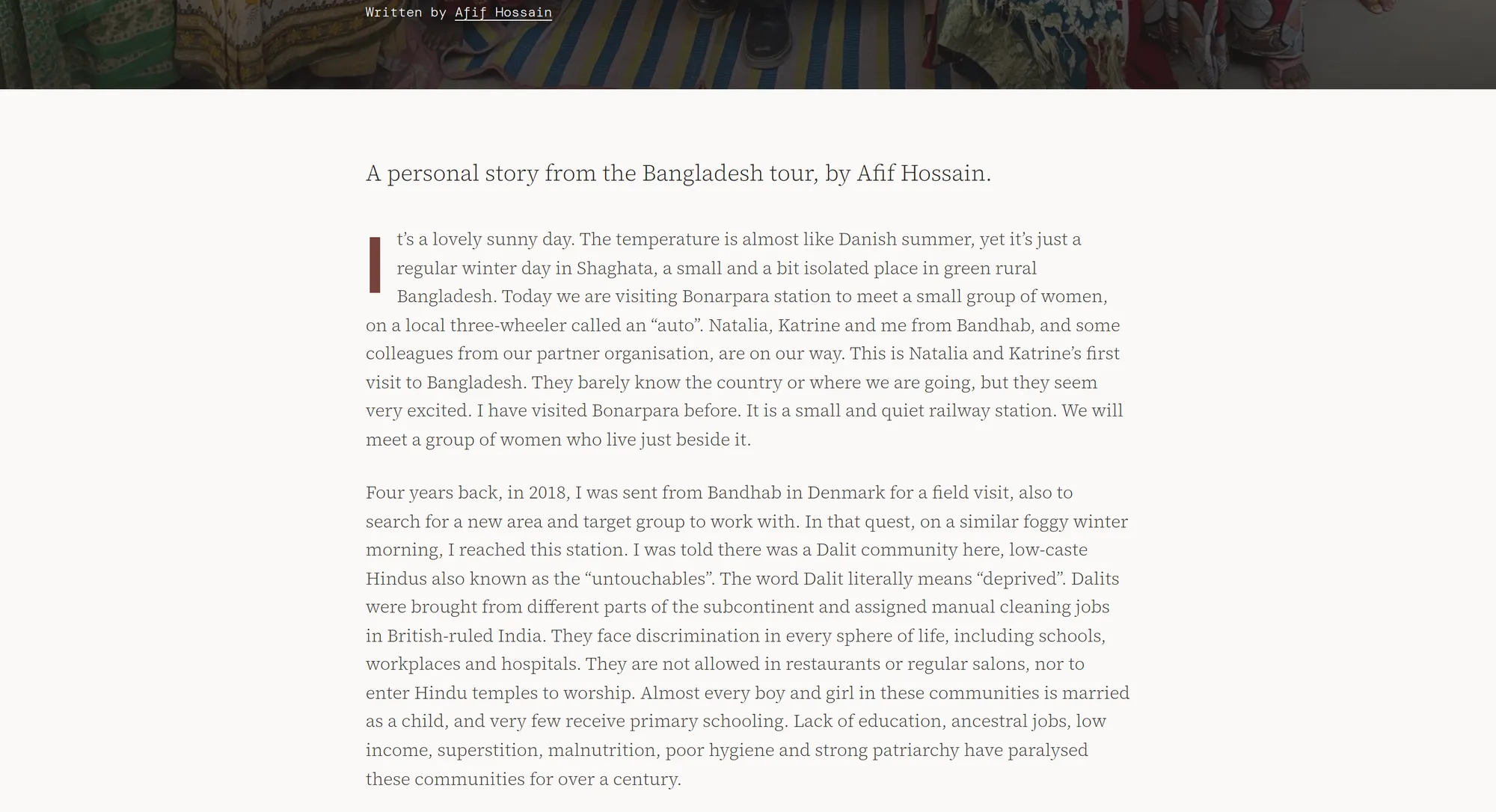
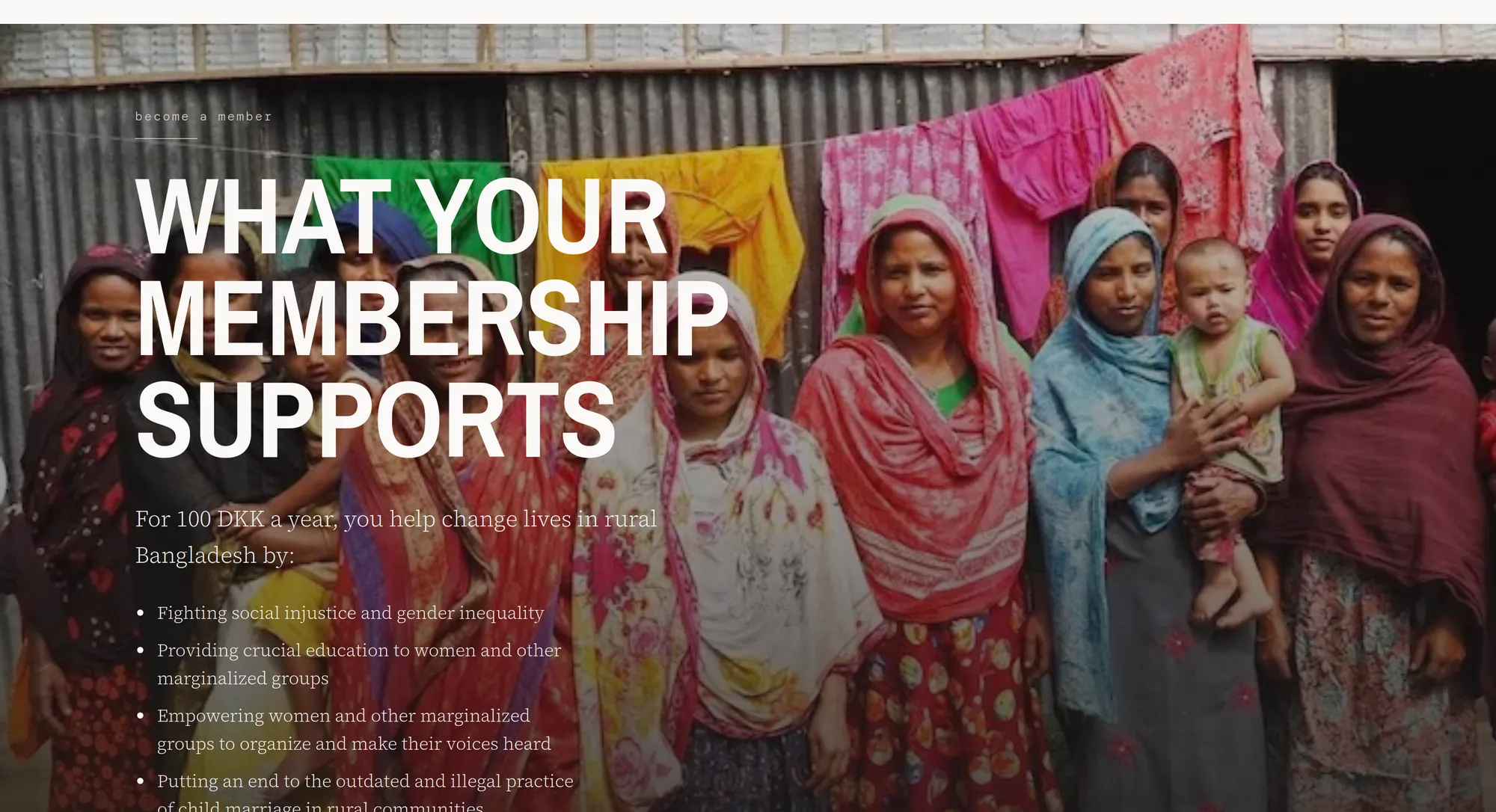
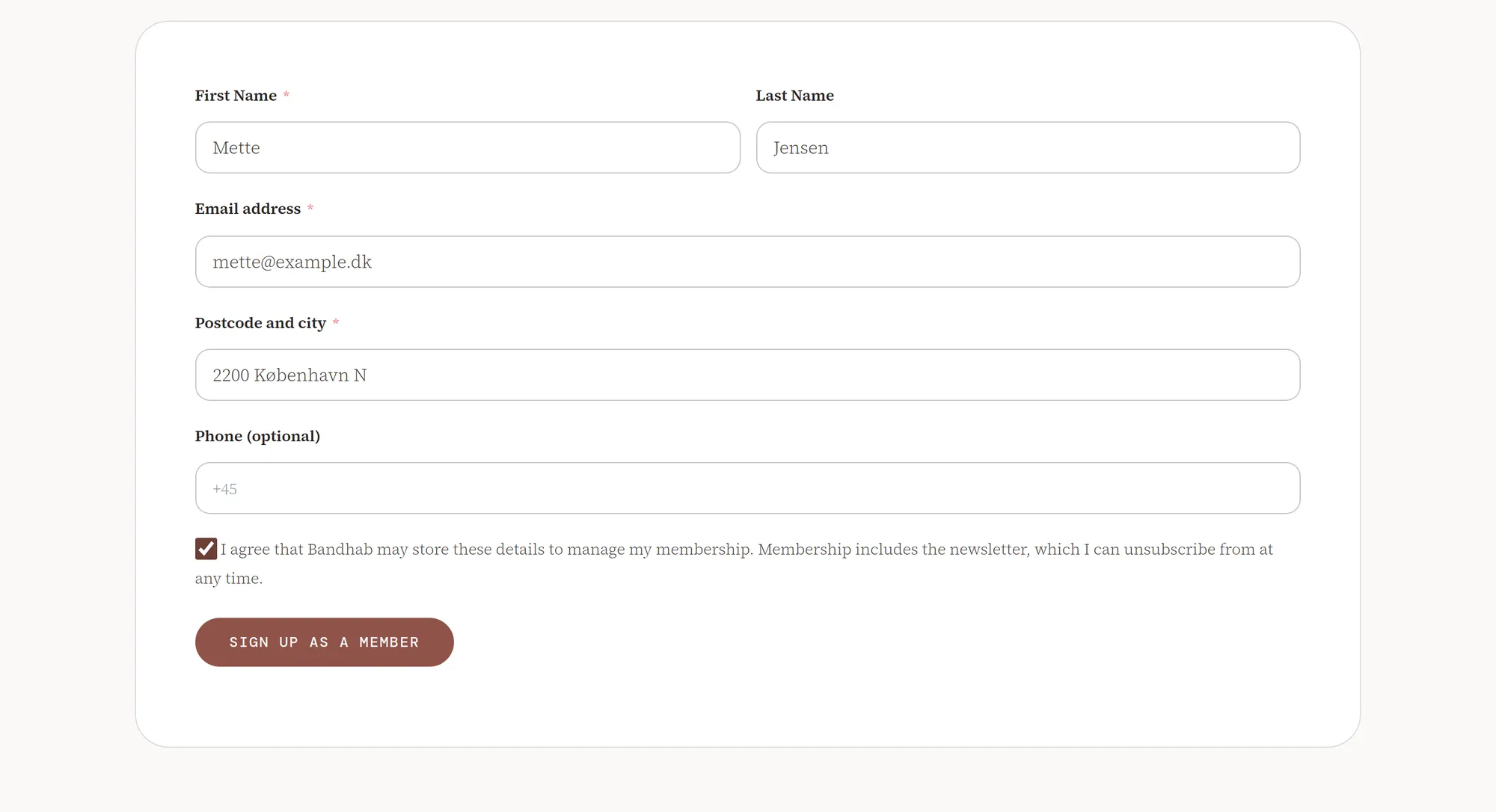
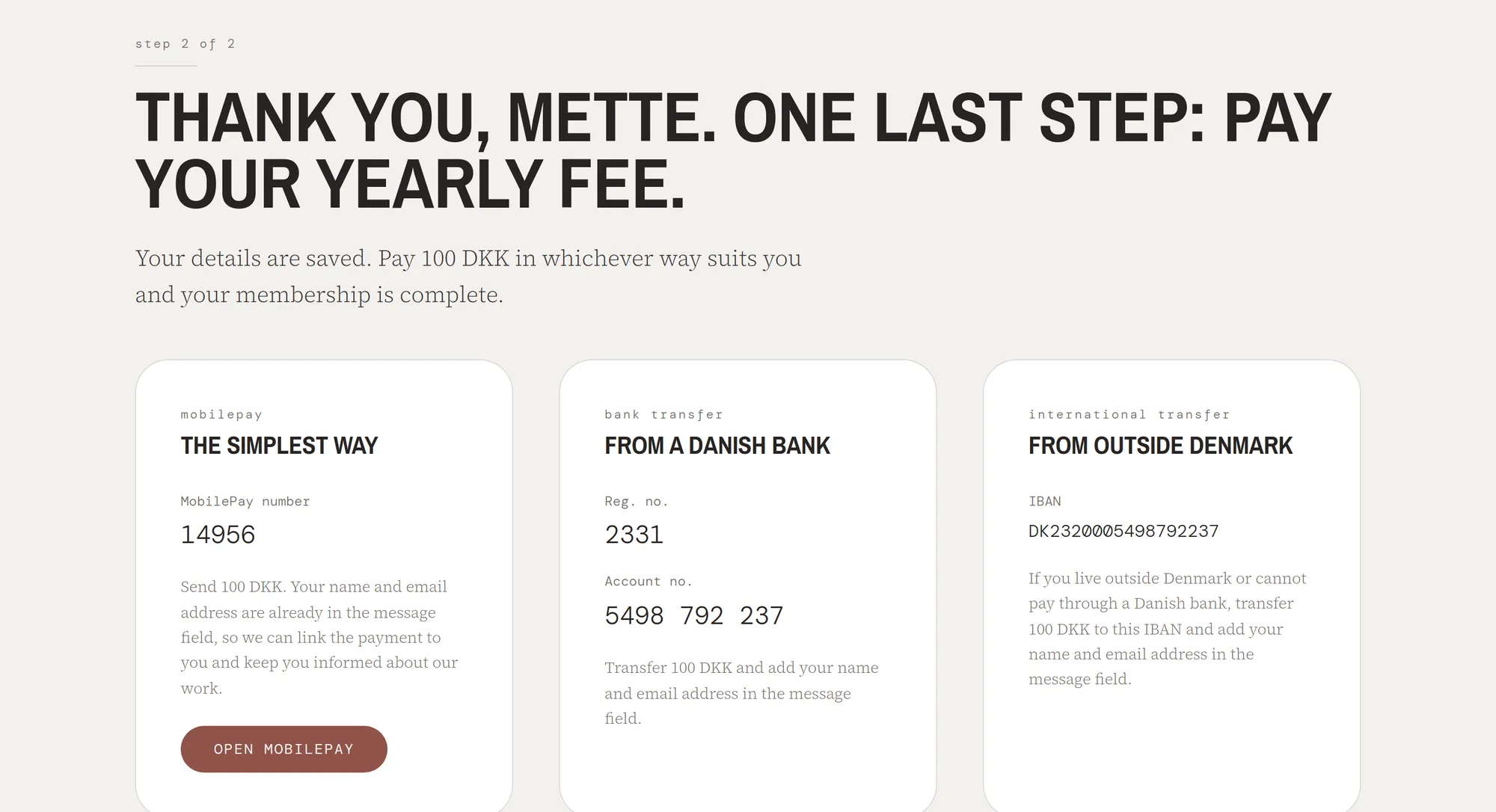
BANDHAB ran on an outdated theme that was hard to update, with no online membership sign-up. Stories from the field were hard to find, and every old address had to keep working for Google and partners.
A full redesign on WordPress's block editor, with user flows for the reasons people visit: explore the work, read the stories, join or support. A four-section menu, project pages and four story layouts carry it, along with a membership sign-up with MobilePay and bank transfer. Underneath sits a design system written for AI to build with, so new pages stay on brand. Search titles, descriptions and redirects from every old address are in place.
Ran the intake with the board and staff, mapped their needs into a site structure, then designed and built it with Claude Code. Set up search, forms and a data-protection check, and handed over an editor guide so the team runs the site without me.
| CMS | WordPress block editor, Frost child theme, custom blocks |
|---|---|
| Search | Yoast SEO, redirects from every old address |
| Email and members | WP Mail SMTP |
| Payments | MobilePay and bank transfer |
| Built with | Claude Code, Novamira |
How I work
The Pull method.
Building is no longer the hard part. Knowing what to build is. So evidence decides the next step, not the plan: the bigger the bet, the more evidence it needs.
Pululu → Pull. Sorry.
- 01Pull the problem from people.Interviews, conversations, watching people work, and the data. With room for ideas nobody asked for.Is it real, and does it matter most right now?
- No Park it
- 02Pull it apart.Weigh expected value against investment, write down what success looks like, and test the riskiest assumption cheaply: value, usability, feasibility or compliance.Does it hold up, and is it worth the investment?
- Wrong problem 01 Back to people
- Not worth it Stop
- 03Pull a small slice through.A small team and AI agents build the smallest useful version, and a few real users try it. A person decides what ships.Does it work, and can it be measured?
- No 02 Another answer
- 04Pull the learning back.Compare what those users do with the success that was written down.Did it make a difference?
- Yes 05 Release it
- Not yet 02 Another answer
- Wrong problem 01 Back to people
- 05Keep pulling.Release it to everyone, keep it healthy, watch how people behave, and test whether the next slices still make sense.Next slice, or something else?
- Still makes sense 03 Next slice
- Something else 01 Back to people
- Not used Retire it
Clients and teams
2016 – nowI've helped teams at
B2B
- Aerospace
- Energy
- Chemicals and adhesives
- Building products
- Software


B2C
- Sportswear and outdoor
- Automotive
- Telecom
- Home retail
- Gaming and lottery


In numbers
- 10 Years
- In product, consulting and operations
- 5 Countries
- Netherlands, Taiwan, China, Denmark, Australia
- 12+ Clients
- From aerospace to sportswear

About
Give me a messy problem and a blank page.
I work across strategy, business and technology, helping organisations navigate ambiguity, identify opportunities and turn them into something tangible.
Right now, it’s paperwork. At KVIK, plumbers talk through the job, and AI turns their words into clear, well-written documentation. With Saldo, it’s money spread across Europe, brought together in one place. Before that, it was four product teams without roadmaps. I helped them find direction, put a planning process in place, and designed a tool to support it, which I then built with a developer.
In Shanghai, it was an e-commerce agency losing more money the more it sold. I got to the bottom of its pricing model, and we reshaped the team and the offering. Costs fell by 30%, and the business returned to profitability. I’ve also established AKQA’s marketing function across China and Japan, and grown a business analysis team in Copenhagen.
Whether it’s shaping product strategy and operations, finding the right product direction, exploring what AI can make possible for your product organisation, stepping in as an interim product person, or working through a business challenge, I’m always interested in working on a good problem and the people trying to solve it.